





Your pain is not an overreaction. It’s information.
If your period pain feels like a storm instead of a drizzle, you may have wondered whether something deeper is going on. For many women, that “something” is endometriosis—a chronic condition marked by inflammation and estrogen sensitivity.
What Is Endometriosis?
Endometriosis is a condition in which tissue similar to the lining of the uterus grows outside the uterus. It most often appears on the ovaries, fallopian tubes, and the lining of the pelvis, and it can also affect nearby organs such as the bladder or bowel.
This tissue still responds to hormonal changes during the cycle. But because it’s outside the uterus, it doesn’t have an easy way to leave the body.
Over time, that can lead to bleeding, irritation, inflammation, and scar tissue or adhesions.
The result can be:
- Bleeding and irritation.
- Ongoing inflammation.
- Scar tissue (fibrosis) and adhesions, where organs can stick together
How Common Is Endometriosis?
Endometriosis is estimated to affect about 1 in 10 women of reproductive age worldwide. That’s millions of people — yet many never receive a timely diagnosis. When researchers look only at confirmed diagnoses, rates appear lower, which suggests many cases are still missed or delayed.
Symptoms: More Than “Bad Cramps”
Endometriosis can cause:
Severe menstrual cramps.
Pelvic pain before and during your period
Pain during sex
Pain with bowel movements or urination, especially around the period.
Heavy bleeding or spotting between periods.
Bloating and digestive discomfort.
Trouble getting pregnant.
Pain level doesn’t always match what shows up on scans or imaging. Small lesions can cause intense pain, and larger lesions may sometimes cause less.
The Diagnostic Gap
One of the most difficult parts of endometriosis is how long it can take to be diagnosed. For many people, there’s a delay of years between the first symptoms and real answers.
In that time, symptoms are often:
Dismissed as “normal period pain”
Mistaken and/or misdiagnosed as IBS, generic pelvic pain, or anxiety
Passed between different specialists
This delay is not your fault. It reflects how under‑recognized endometriosis still is.
Estrogen and Inflammation: The Loop That Drives Endo
Endometriosis is often fueled by a loop between estrogen and inflammation. The lesions are highly responsive to estrogen, and they can also trigger inflammation in the pelvic environment.
That inflammation brings in inflammatory molecules and immune activity that can keep pain going.
Estrogen acts like fuel, and inflammation acts like fire. Together, they help explain why endometriosis can feel so intense, stubborn, and difficult to ignore.
Research shows that endometriosis lesions:
Are highly responsive to estrogen
Contribute to local inflammation in the pelvis
Create an environment rich in inflammatory molecules and activated immune cells
How Endometriosis Affects Daily Life
Endometriosis is bigger than a painful period. It can affect work, relationships, emotional well-being, and fertility.
Many women report:
Missing work or school due to pain
Canceling plans or pulling back socially during certain parts of the cycle
Feeling anxious, discouraged, or worn down by chronic pain
Navigating strain in intimate relationships because sex hurts
Worrying about fertility and what the future may hold.
This impact is real, and it goes far beyond the physical symptoms.
Treatment: A Layered Approach
There’s no single approach that works for everyone, but common options include:
Pain management
Anti-inflammatory medications, pelvic floor physical therapy, and other pain-focused treatments can help manage symptoms. Some people also find complementary approaches like acupuncture or mindfulness supportive.
Surgery
Laparoscopic surgery can be used to diagnose endometriosis and remove lesions or scar tissue. It may provide relief, though symptoms can return if the underlying drivers are still active.
Lifestyle and self‑management
Gentle movement, heat, rest, and anti-inflammatory nutrition can support comfort and compliment medical care.
Your care plan should be shaped around your pain levels, goals, and life.
How to Talk to Your Care Team
Advocating for yourself with endometriosis can be exhausting. A few questions that may help:
Could my pain be related to endometriosis?
What evaluation makes sense for me—imaging, referral, or surgery?
What are my hormonal and non‑hormonal options for pain relief?
How can we support my fertility goals, now or in the future?
Bringing a symptom diary, a support person, or written notes can make visits feel more manageable.
Which Lasso Formula Fits Your Endo Journey?
Supplements can’t cure endometriosis, but they can support the terrain your body is working with.
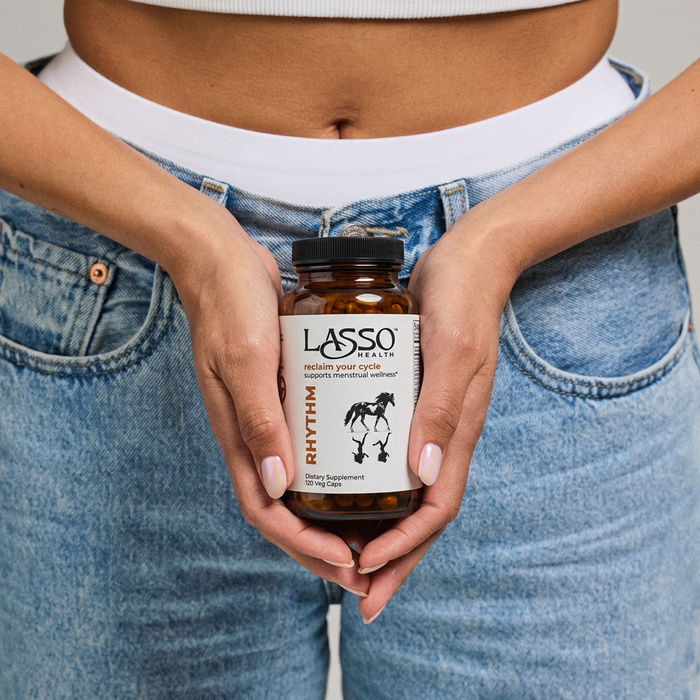
Start with Rhythm if the physical side of endometriosis feels biggest: painful bleeds, heavy periods, and cycle symptoms that leave you wiped out. Rhythm includes NAC, DIM, and Calcium D-Glucarate, plus R-ALA, Quercetin (Quercefit), and Astaxanthin.
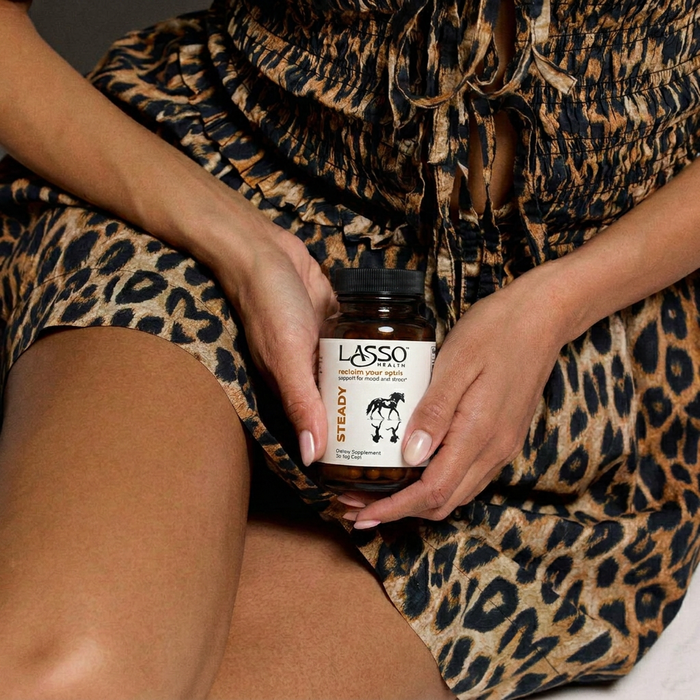
Choose Steady if the emotional toll of endometriosis feels just as real as the pelvic pain—chronic stress, mood swings, anxiety, or feeling like your nervous system is always braced for the next wave. Steady includes Affron® Saffron and Meriva® Curcumin, ingredients studied for mood and menstrual discomfort.
Endometriosis often affects more than just pain. If both physical symptoms and emotional fatigue are part of your experience, you may want support that addresses both sides of the cycle. Rhythm and Steady can each play a different role as you work with your care team.
REFERENCES
Endometriosis: Symptoms and causes
Mayo Clinic Staff. Endometriosis: Symptoms and causes. Mayo Clinic.
https://www.mayoclinic.org/diseases-conditions/endometriosis/symptoms-causes/syc-20354656
Endometriosis: Causes, Symptoms, Diagnosis & Treatment
Cleveland Clinic. Endometriosis: Causes, Symptoms, Diagnosis & Treatment.
https://my.clevelandclinic.org/health/diseases/10857-endometriosis
Endometriosis
World Health Organization. Endometriosis.
https://www.who.int/news-room/fact-sheets/detail/endometriosis
Estrogen Receptors and Endometriosis
Bulun SE, Monsavais D, Pavone ME, Dyson M, Xue Q, Attar E, et al. Estrogen Receptors and Endometriosis. Semin Reprod Med. 2012 Jul;30(4):36-45. doi: 10.1055/s-0032-1312878. PMID: 22777976; PMCID: PMC7215544.
https://pmc.ncbi.nlm.nih.gov/articles/PMC7215544/
The Estrogen–Immune Interface in Endometriosis
Khan KN, Fujishita A, Koshiba A, et al. The Estrogen–Immune Interface in Endometriosis. Front Endocrinol (Lausanne). 2025.
https://pmc.ncbi.nlm.nih.gov/articles/PMC11720315/
Endometriosis: diagnostic delays and quality of life
Nnoaham KE, Hummelshoj L, et al. Impact of endometriosis on quality of life and work productivity: a multicenter study across ten countries. Fertil Steril. 2011;96(2):366-373. doi: 10.1016/j.fertnstert.2011.05.090. PMID: 21718968.
https://pubmed.ncbi.nlm.nih.gov/21718968/
Endometriosis clinical guidance
American College of Obstetricians and Gynecologists. ACOG Publishes New Endometriosis Clinical Guidance, Aiming to Shorten Time to Diagnosis. 2026 Apr 22.
https://www.acog.org/news/news-releases/2026/02/acog-publishes-new-endometriosis-clinical-guidance-aiming-shorten-time-diagnosis
Endometriosis treatment and management
American College of Obstetricians and Gynecologists. Endometriosis.
https://www.acog.org/womens-health/faqs/endometriosis

